
Gower Gulch: The Violent True Crime History Behind Hollywood’s Cowboy Corner
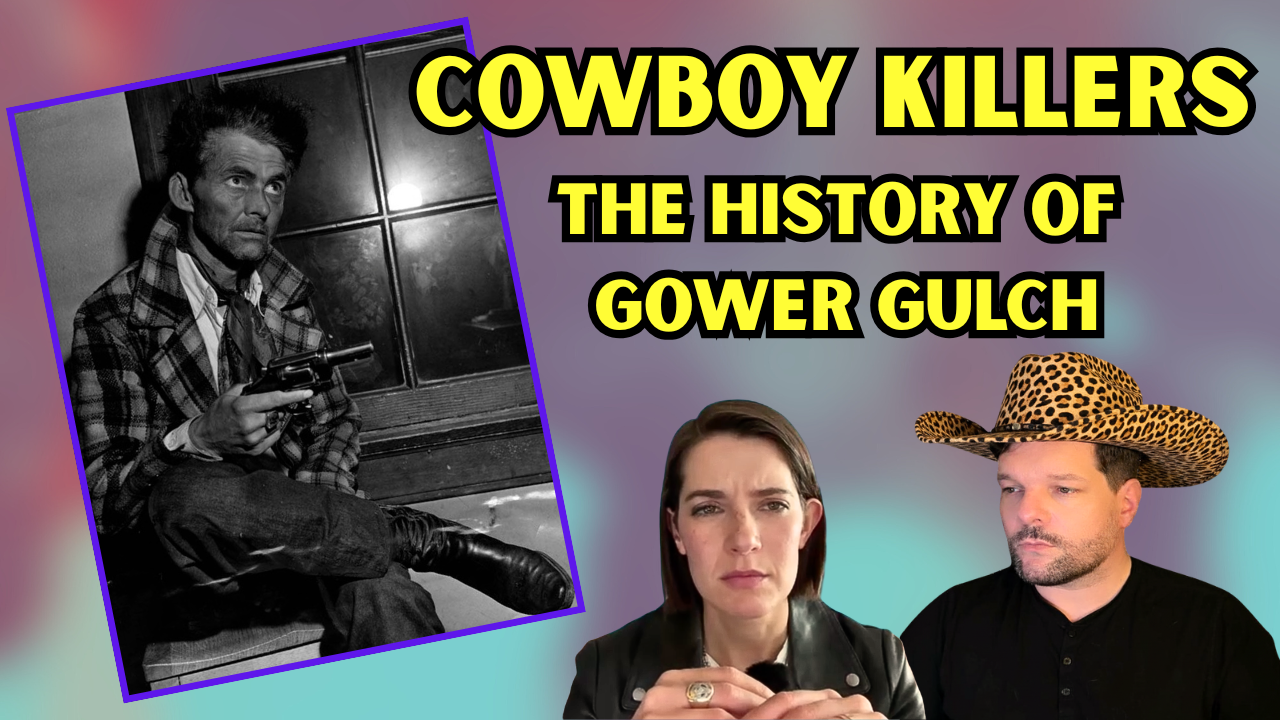
Long before modern tourists flooded Los Angeles in search of movie history, a dusty intersection near Sunset Boulevard and Gower Street became one of the strangest gathering places in early Hollywood. Known as “Gower Gulch,” the area served as an unofficial hiring ground for struggling cowboy actors, stuntmen, wranglers, and Western film extras hoping to land work during the golden age of Hollywood Westerns.
For decades, the corner outside the Columbia Drugstore was packed with men dressed in full cowboy attire waiting for studios to call with available jobs. But beneath the mythology of the Old West image Hollywood projected onto movie screens, Gower Gulch developed a darker reputation tied to violence, shootings, drunken feuds, and real-life killings.
This bizarre history recently caught the attention of true crime podcast host Daryn Carp, who happened to walk through the area while exploring Los Angeles. After noticing the unusual history tied to the intersection and its old Hollywood reputation, she became curious about the real stories behind “Gower Gulch,” ultimately inspiring a deeper investigation into the violent history surrounding Hollywood’s forgotten cowboy community.
What Was Gower Gulch?
In the early twentieth century, Sunset Boulevard and Gower Street became a daily meeting point for unemployed and underemployed Western film extras. Productions often expected extras to provide their own horses, cowboy hats, boots, and costumes, so dozens of performers gathered outside the Columbia Drugstore each day fully dressed in Western gear while waiting for work opportunities.
The drugstore manager reportedly allowed the cowboys to use the store’s phone booth to contact nearby film studios and casting agents.
Over time, locals began calling the men “drugstore cowboys,” and eventually the area itself became known as “Gower Gulch.”
While the location became part of Hollywood folklore, it also developed a reputation for instability fueled by poverty, alcoholism, personal rivalries, and violent confrontations among struggling actors.
The 1925 Killing of James “Yakima Jim” Anson
One of the earliest violent incidents connected to Gower Gulch occurred in August 1925.
A stuntman and actor named William Bay became involved in a confrontation with fellow film extra James Anson, who was known in the industry as “Yakima Jim.”
According to newspaper accounts from the time, the altercation escalated into a struggle involving a firearm at the Hollywood Hotel. During the fight, the pistol discharged and fatally wounded James Anson.
Police launched a manhunt after reports indicated William fled the scene. Authorities later stated he attempted to escape capture by leaping from a second-story window before officers eventually arrested him nearby.
William insisted the shooting was accidental.
At trial later that year, his defense argued the gun discharged unintentionally during a drunken struggle rather than as an intentional killing. After hearing testimony, the jury returned a verdict of not guilty.
The Death of William Bay
Nearly a decade later, William Bay himself became the victim of another violent shooting.
In October 1933, Bay was living with a wealthy cowgirl actress named Alta Lessert. Sources from the period described their relationship as volatile and unstable.
During a heated argument inside their home, Alta allegedly shot William multiple times in the chest.
Actress Frances Martin later testified that she saw Bay kissing Alta shortly before the shooting erupted, though the exact cause of the argument remained unclear.
After shooting William, Alta turned the gun on herself in what investigators described as an attempted suicide.
Authorities charged Alta Lessert with murder after William died from his injuries. However, during her 1934 trial, jurors split evenly between conviction and acquittal, leading prosecutors to eventually dismiss all charges.
The 1940 “Six Steps to Hell” Shooting
The most infamous incident in Gower Gulch history occurred in February 1940 outside the Columbia Drugstore itself.
Cowboy actor Jerome Ward, better known as “Blackjack Ward,” confronted another Western extra named John Tyacke over a woman named Julie.
Witnesses described the confrontation as resembling a real-life Hollywood Western showdown.
According to reports, Jerome accused John of “fooling around” with his girlfriend before pulling out a .45 caliber revolver in front of a crowd of gathered cowboy extras.
Witnesses later claimed Jerome dramatically declared:
“Johnny Tyke, there’s six steps to hell, and according to what I know of your lousy record, you’ve taken all six of them!”
When John lunged toward him, Jerome opened fire.
As John collapsed, Jerome allegedly continued shooting while naming what he called the “six steps to hell”:
Lying
Horse-stealing
Woman-stealing
Cowardice
Double-crossing a friend
Murder
After emptying the revolver, Jerome fled before police eventually cornered and arrested him.
The Sensational Trial of Jerome “Blackjack” Ward
Jerome Ward’s 1940 trial attracted massive media attention because of the theatrical nature of the killing and the colorful personalities involved.
Newspapers described courtrooms packed with Hollywood cowboys and Western film personalities.
Jerome pleaded both not guilty and not guilty by reason of insanity while also claiming self-defense. During testimony, he argued John Tyacke had threatened him for months and was feared within the cowboy acting community.
Several major Western film stars testified on Jerome’s behalf, including:
Randolph Scott
Noah Beery Sr.
Buck Jones
Randolph Scott described Jerome as a peaceful man, while other witnesses painted John Tyacke as violent and dangerous.
Ultimately, the court ruled Jerome acted in self-defense, and authorities dismissed all charges against him.
The case permanently cemented the intersection’s notorious reputation.
Jerome Ward’s Later Violence
Even after escaping conviction for the 1940 shooting, Jerome Ward continued getting involved in violent incidents.
In 1941, he pulled a firearm during a drunken altercation at the Roundup Cafe and was later convicted of assault with a deadly weapon.
Police records from the early 1950s also connected Jerome to additional arrests involving assault, disturbing the peace, and even an alleged meat cleaver attack.
Jerome eventually died of natural causes in 1954, bringing an end to one of the most infamous chapters in Gower Gulch history.
Why Gower Gulch Still Fascinates Hollywood Historians
The violent incidents tied to Gower Gulch blurred the line between Hollywood fantasy and real-life crime.
These struggling cowboy actors spent their days portraying gunfighters, outlaws, and rugged Western heroes on movie screens while many privately battled alcoholism, unemployment, poverty, and personal instability.
Over time, the shootings, arrests, and public trials transformed Sunset Boulevard and Gower Street into one of the strangest pieces of forgotten Hollywood folklore.
Today, most people passing through the area likely have no idea that the intersection once served as both the heart of Hollywood’s cowboy extra culture and the setting for several shocking true crime stories that helped define the legend of Gower Gulch.
