
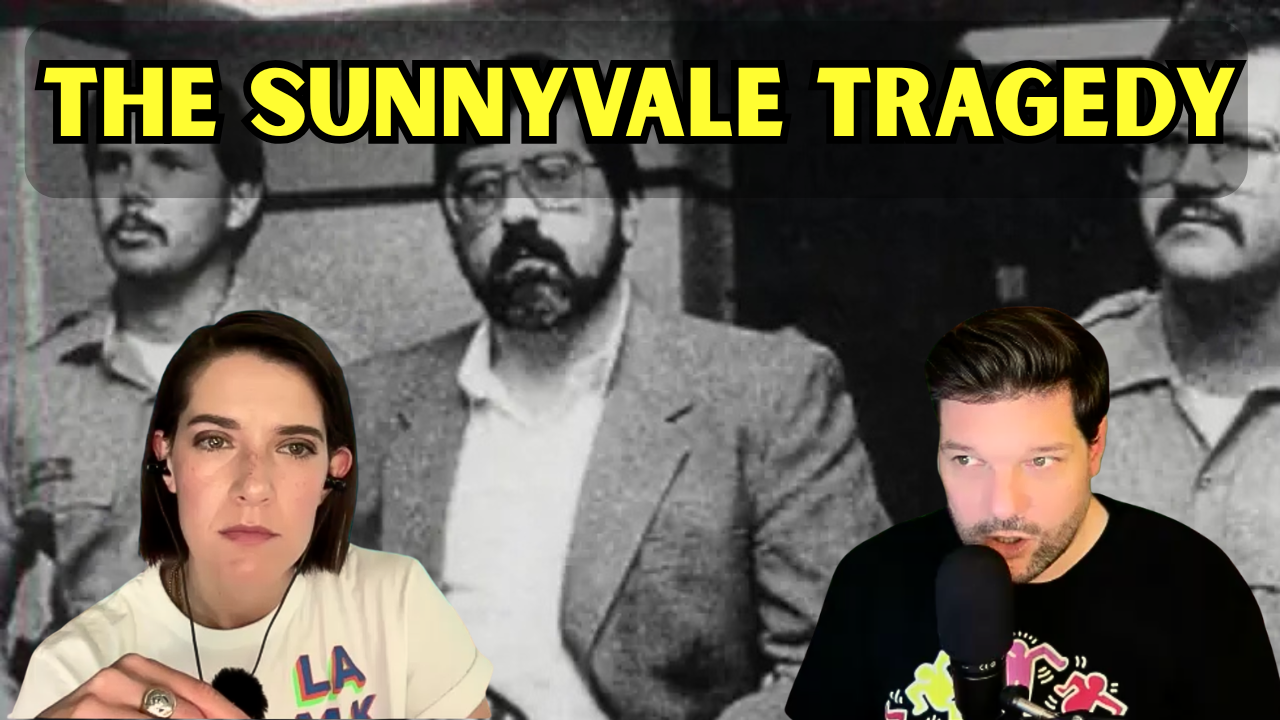
On February 16, 1988, a disgruntled former employee named Richard Farley carried out one of the deadliest workplace shootings in California history at Electromagnetic Systems Labs (ESL) in Sunnyvale. The attack left seven people dead, multiple others wounded, and forever changed conversations surrounding stalking, workplace violence, and obsessive fixation.
At the center of the tragedy was Farley’s years-long obsession with coworker Laura Black, whose repeated attempts to reject and escape his unwanted attention ultimately escalated into deadly violence.
Who Was Richard Farley?
Richard Farley was born in Texas in July 1948 and spent much of his childhood moving around the United States as his father served as an Air Force mechanic. Eventually, the family settled in Petaluma, California.
Friends and family later described Farley as intelligent but socially isolated. He excelled academically and enjoyed solitary hobbies such as photography, baking, and studying rather than building close friendships.
In 1967, Farley joined the United States Navy and spent roughly a decade working as a cryptologic technician, maintaining classified electronic systems tied to national security operations. During his military career, he developed advanced technical skills and earned commendations for marksmanship.
Coworkers later described him as emotionally detached, arrogant, and prone to grandiose thinking.
Richard Farley’s Job at ESL
After receiving an honorable discharge from the Navy in 1977, Farley transitioned into civilian work at Electromagnetic Systems Labs, commonly known as ESL, a defense contractor located in Silicon Valley.
For several years, he worked internationally as a field service engineer in Australia before returning to ESL’s Sunnyvale headquarters in 1984. That same year, he met 22-year-old engineer Laura Black.
Farley later testified that he became obsessed with Laura almost immediately.
The Years of Stalking
Beginning in 1984, Farley launched an escalating campaign of stalking and harassment against Laura Black despite her repeated rejections.
Over roughly three and a half years, Farley:
Wrote approximately 200 letters to Laura
Left homemade baked goods on her desk
Followed her to and from work
Enrolled in her aerobics classes
Attended her softball games
Broke into her desk to obtain personal information
Secretly obtained a key to her residence
By 1985, Laura sought help from ESL’s Human Resources department. Managers formally warned Farley to stop contacting her.
Instead of backing down, his behavior became increasingly threatening.
Farley began discussing his extensive gun collection with coworkers and warned Laura directly that he was highly skilled in the use of firearms.
In 1986, after ESL management ordered psychological counseling, Farley refused and was terminated from the company. He reportedly warned that if he lost his job, he would “take other people with him.”
Warning Signs Before the ESL Shooting
Even after losing his job, Farley continued stalking Laura.
Throughout 1987, he sent increasingly disturbing letters suggesting he had nothing left to lose. He also discussed mass shootings with friends and coworkers, specifically referencing the 1984 San Ysidro McDonald's massacre and speculating about how people would react if a similar attack occurred at ESL.
Farley also questioned employees about the building’s security doors and whether shotgun blasts could penetrate the glass.
On February 2, 1988, Laura Black finally obtained a restraining order against him. Farley later described the order as “the ultimate act of abandonment.”
Days later, Farley purchased additional firearms and practiced shooting at human-shaped targets at a gun range.
Investigators later concluded that the attack had been carefully planned in advance.
The ESL Mass Shooting
On February 16, 1988, Farley drove a rented motor home into the ESL parking lot carrying nearly 100 pounds of weapons and over 1,000 rounds of ammunition.
At approximately 2:50 p.m., he opened fire.
His first victim was employee Lawrence Kane, whom Farley shot and killed in the parking lot before blasting his way through the building’s locked glass entrance with a shotgun.
Farley then moved through the facility hunting employees and firing at anyone in his path.
Victims included:
Lawrence Kane
Wayne Williams Jr.
Helen Lamparter
Glenda Moritz
Ronald Reed
Joseph Silva
Ronald Doney
Several others were critically wounded, including Laura Black, who survived after being shot in the shoulder while barricaded inside her office.
During the attack, Farley called ESL security and chillingly admitted he was the one “wasting all these people,” blaming Laura and her attorney for the massacre.
The Five-Hour Standoff
After the shooting, Farley barricaded himself inside the ESL building, leading to a tense standoff with police that lasted several hours.
During negotiations, Farley reportedly told police he wanted Laura to survive so she would remember what he had done for the rest of her life.
Eventually, around 8:30 p.m., Farley surrendered peacefully to the Sunnyvale SWAT team after officers promised him food and a soft drink.
The massacre had lasted nearly five hours.
Richard Farley’s Trial and Conviction
At trial in 1991, Farley admitted carrying out the shooting but claimed he originally intended only to kill himself in front of Laura Black rather than murder others.
Prosecutors dismantled this argument by presenting overwhelming evidence of premeditation, including:
His massive weapons stockpile
Target practice sessions
Threatening statements
Surveillance of the building
Advance planning documents
Prior warnings to coworkers
On October 21, 1991, the jury convicted Farley of:
Seven counts of first-degree murder
Five counts of attempted murder
Multiple additional felony charges
In January 1992, a judge sentenced him to death.
Recent Appeals and Resentencing Efforts
For decades, Farley remained on California’s death row while pursuing appeals. In 2009, the California Supreme Court upheld both his conviction and death sentence, citing overwhelming evidence of planning and intent.
In 2024, Santa Clara County District Attorney Jeff Rosen proposed resentencing several death row inmates as part of a criminal justice initiative known as Bend the Arc. Farley became one of the cases considered for conversion to life without parole.
Families of the victims strongly opposed the move.
Survivors and relatives described the lasting trauma caused by the attack, with some survivors continuing to live with bullet fragments in their bodies decades later.
On March 21, 2025, Judge Benjamin Williams denied the resentencing request, ruling that Farley had shown neither remorse nor rehabilitation and continued to pose a danger to society.
Farley remains incarcerated at the California Health Care Facility in Stockton.
Why the Richard Farley Case Still Matters
The ESL shooting became one of the earliest nationally recognized examples of workplace mass violence driven by obsessive stalking behavior.
The case highlighted critical warning signs that are now widely recognized in stalking investigations, including:
Escalating fixation
Boundary violations
Threatening language
Weapon obsession
Repeated rejection intolerance
Surveillance behavior
Today, the Richard Farley case continues to be studied by criminologists, workplace safety experts, and behavioral threat assessment professionals as a chilling example of how untreated obsession and grievance-fueled violence can escalate into mass murder.
