
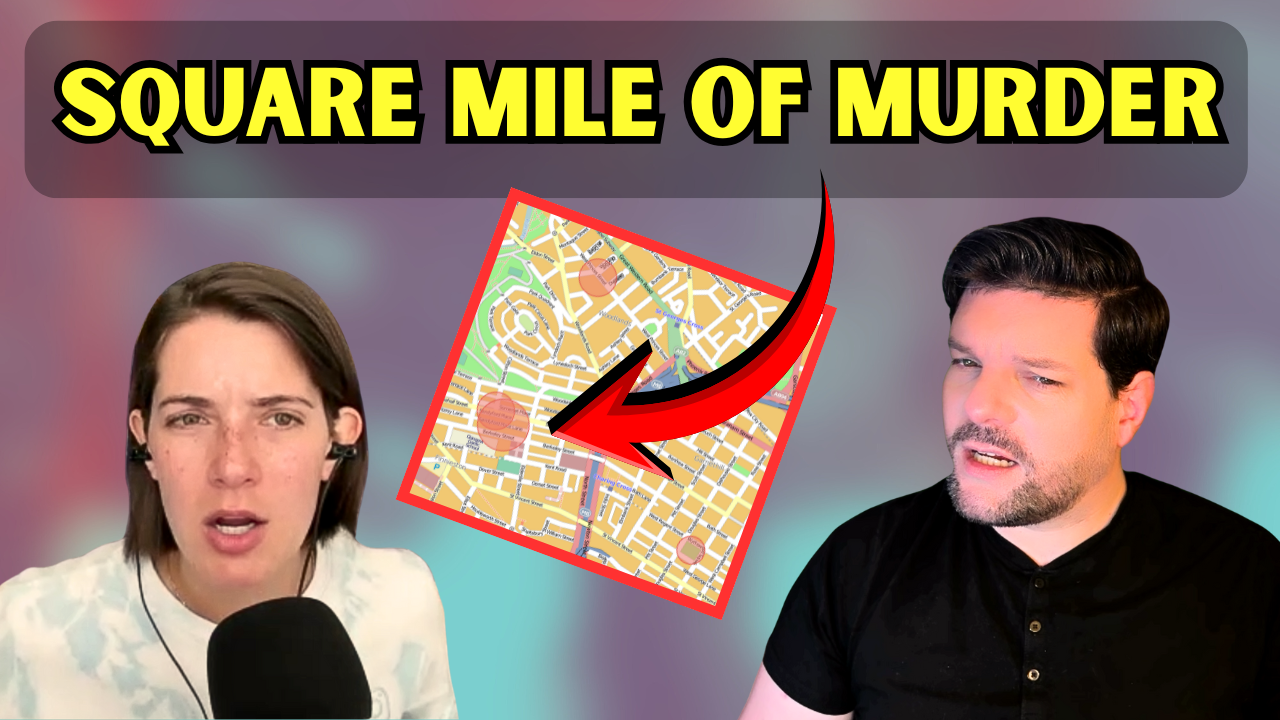
In the heart of Glasgow lies one of the most chilling concentrations of murder cases in Scottish history. Centered around Blythswood Square, Sandyford Place, Sauchiehall Street, and West Princes Street, this small section of the city became infamous for four shocking murders that unfolded between 1857 and 1908.
Journalist and author Jack House later coined the phrase “Square Mile of Murder” in his 1961 book of the same name, immortalizing the area’s grim reputation. Over the decades, the murders became legendary not only because of their brutality, but also because of the scandal, wrongful convictions, public outrage, and lingering mysteries surrounding them.
Some even believed the area itself was cursed.
The First Murder: The Poisoning of Pierre Emile L’Angelier (1857)
The first case connected to Glasgow’s Square Mile of Murder involved socialite Madeleine Smith and her secret lover Pierre Emile L'Angelier.
In 1855, Madeleine began a clandestine romantic relationship with L’Angelier, an apprentice clerk of lower social status. The pair exchanged passionate letters in which Madeleine allegedly promised marriage.
But in 1857, Madeleine’s wealthy family arranged a more socially acceptable engagement for her. When she attempted to end the affair, L’Angelier reportedly threatened to expose their intimate letters and destroy her reputation unless she married him.
Shortly afterward, Madeleine was seen purchasing arsenic from a chemist.
On March 23, 1857, L’Angelier was found dead from arsenic poisoning inside his Glasgow boarding room. Police quickly focused on Madeleine as the prime suspect after discovering the couple’s letters among his belongings.
However, the evidence remained circumstantial:
No eyewitnesses linked Madeleine directly to the poisoning
The colored arsenic sold by chemists was not found in the victim’s body
Testimony suggested L’Angelier may have contemplated suicide
The sensational trial captivated Scotland.
Ultimately, the jury returned Scotland’s famous “Not Proven” verdict, meaning jurors suspected guilt but did not believe prosecutors proved the case beyond a reasonable doubt.
Though Madeleine Smith walked free, many historians still believe she likely poisoned L’Angelier.
The Sandyford Murder of Jessie McPherson (1862)
Five years later, another horrifying murder rocked Glasgow.
In July 1862, servant Jessie McPherson was brutally attacked inside a home at Sandyford Place. Her killer struck her repeatedly with a meat cleaver, inflicting dozens of devastating wounds.
The crime scene deeply disturbed investigators.
While walls throughout the house were covered in blood, portions of the floors and parts of Jessie’s body appeared to have been carefully cleaned by the killer. The most important clue left behind was a series of bloody footprints across the polished floor.
The case became historically significant because it marked the first Scottish murder investigation to use forensic crime scene photography.
Suspicion eventually centered on former servant Jessie McLachlan after stolen silverware from the home was linked to her through a pawnbroker. Police also recovered bloodied clothing from her residence.
Investigators attempted an early form of footprint comparison by having McLachlan step in animal blood and recreate the prints found at the crime scene.
McLachlan insisted she was innocent, instead accusing the elderly father of her employer, James Fleming, of committing the murder after Jessie McPherson rejected his advances.
Despite questions surrounding the investigation, the jury convicted Jessie McLachlan after only 19 minutes of deliberation.
Public outrage followed.
A petition containing 50,000 signatures eventually spared her execution, commuting her sentence to life imprisonment instead. Many criminologists today believe Jessie McLachlan may actually have been innocent.
Dr. Edward Pritchard: Glasgow’s “Human Crocodile” (1865)
The third Square Mile murder case involved physician Edward William Pritchard, one of the most notorious poisoners in Scottish history.
Suspicion first emerged in 1863 after a servant named Elizabeth McGrain died in a suspicious bedroom fire at Pritchard’s home. Investigators noted she appeared not to have attempted escape, suggesting she may have already been dead before the fire began.
No charges were filed at the time.
But two years later, Pritchard’s wife Mary Jane and her mother Jane both became violently ill with mysterious symptoms. Pritchard diagnosed them himself with “gastric fever” while discouraging outside medical opinions.
Both women died within days of one another in early 1865.
An anonymous letter sent to authorities triggered a deeper investigation. After exhuming the bodies, investigators discovered both women had been slowly poisoned over time.
Pritchard’s dramatic displays of grief during his wife’s funeral earned him the nickname “The Human Crocodile,” referencing the idea of crocodile tears.
Following a highly publicized trial, Pritchard was convicted of murder.
On July 28, 1865, he became the last person publicly executed in Scotland. Thousands reportedly gathered on Glasgow Green to witness the hanging.
The Murder of Marion Gilchrist and the Wrongful Conviction of Oscar Slater (1908)
The final case tied to Glasgow’s Square Mile of Murder remains one of Scotland’s most infamous miscarriages of justice.
In December 1908, 83-year-old Marion Gilchrist was beaten to death during a robbery inside her home on West Princes Street.
Despite possessing jewelry worth thousands, the killer fled with only a single brooch after being interrupted by a neighbor.
Police quickly focused on Oscar Slater, a German immigrant gambler with a colorful reputation.
Authorities viewed Slater suspiciously because:
He left Scotland for New York shortly after the murder
He had attempted to sell a pawn slip for jewelry
Witnesses vaguely connected him to the victim’s neighborhood
However, major problems plagued the case.
Defense witnesses confirmed Slater’s travel plans had been arranged before the murder, and evidence tied to the jewelry turned out to involve an entirely different brooch.
Even the police lineup was criticized, with Slater standing among neatly dressed policemen who looked nothing like him.
Despite weak evidence, the jury convicted Oscar Slater.
Though originally sentenced to death, public pressure reduced the sentence to life imprisonment.
Famed author Arthur Conan Doyle later campaigned aggressively for Slater’s innocence, helping expose flaws in the investigation and trial.
After serving 19 years of hard labor, Slater’s conviction was finally overturned in 1928.
The true killer of Marion Gilchrist was never identified.
Why the “Square Mile of Murder” Still Fascinates Historians
The four crimes connected to Glasgow’s Square Mile of Murder remain legendary because each case reflects a different form of tragedy and injustice:
A possible poisoner who escaped conviction
A servant woman many believe was wrongly imprisoned
A murderous doctor publicly executed
A man who lost nearly twenty years of his life for a crime he likely did not commit
Together, the cases created one of the darkest chapters in Scottish criminal history.
Even today, the quiet streets around Blythswood Square and Sauchiehall Street continue to attract historians, true crime researchers, and tourists fascinated by the mysteries, scandals, and unanswered questions that still haunt Glasgow’s infamous Square Mile of Murder.
